How The Right Choice of Hardware Can Help You Defend Against Supply Chain Attacks.

How The Right Choice of Hardware Can Help You Defend Against Supply Chain Attacks.

How The Right Choice of Hardware Can Help You Defend Against Supply Chain Attacks.

supply-chain-cyber-defences

In an era where digital ecosystems are more interconnected than ever, the security of your organisation is only as strong as the weakest link in your vendor network. Let’s explore the specific risks associated with supply chain attacks and how you can best protect your assets through strategic hardware and software choices.

We will cover:

  • The evolution and history of supply chain attacks
  • Common targets and the technologies used by adversaries
  • The real-world impact of these breaches
  • Mitigation strategies to harden your infrastructure

What is a Supply Chain Attack?

A supply chain attack occurs when an unauthorised actor gains access to a computer system by compromising a third-party provider. Essentially, instead of attacking you directly, they attack the tools, software, or hardware you trust.

These attacks generally fall into two categories:

  • Large-scale Attacks – Attackers gain access to a vendor’s data store or update server, allowing them to distribute malicious code to thousands of organisations simultaneously. For example, compromising a network infrastructure provider during a routine operating system update could grant an attacker administrative privileges across every network using that hardware.
  • Small-scale/Targeted Attacks – Attackers focus on limited information about a specific organisation’s systems to gain a foothold, often acting as a precursor to a more significant breach.

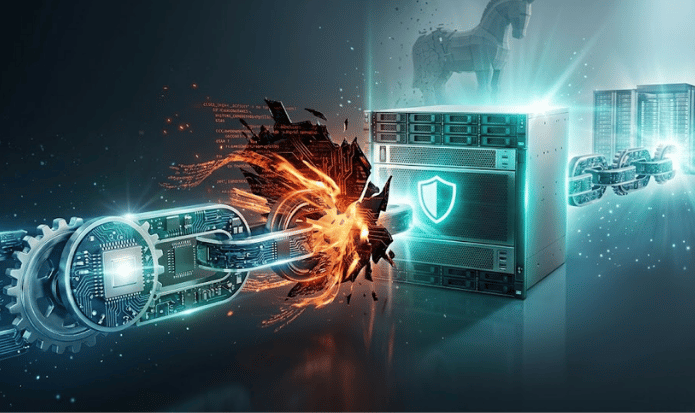
The core issue is trust. When a vendor ships a “turnkey” software or a hardware patch, customers typically install it to stay secure. However, if that update compromised at the source, the customer becomes the victim of a Trojan horse.

What’s New?

The latest company news, industry updates, helpful tips and more straight to your inbox. Sign up below:

Mail Subscribe Form
supply-chain-cyber-defences

In an era where digital ecosystems are more interconnected than ever, the security of your organisation is only as strong as the weakest link in your vendor network. Let’s explore the specific risks associated with supply chain attacks and how you can best protect your assets through strategic hardware and software choices.

We will cover:

  • The evolution and history of supply chain attacks
  • Common targets and the technologies used by adversaries
  • The real-world impact of these breaches
  • Mitigation strategies to harden your infrastructure

What’s New?

The latest company news, industry updates, helpful tips and more straight to your inbox. Sign up below:

Mail Subscribe Form
supply-chain-cyber-defences

In an era where digital ecosystems are more interconnected than ever, the security of your organisation is only as strong as the weakest link in your vendor network. Let’s explore the specific risks associated with supply chain attacks and how you can best protect your assets through strategic hardware and software choices.

We will cover:

  • The evolution and history of supply chain attacks
  • Common targets and the technologies used by adversaries
  • The real-world impact of these breaches
  • Mitigation strategies to harden your infrastructure

Physical vs. Cyber Attacks

Supply chain attacks are a growing concern because they bypass traditional perimeter defences. These threats manifest in two primary ways:

  • Physical Attacks – The weaponisation of physical assets, such as tampering with servers, networking equipment, or vehicles during the manufacturing or shipping process.
  • Cyber-based Attacks – The use of malicious code to infiltrate the software development lifecycle (SDLC).

In both scenarios, the goal is often more than just data theft. Attackers aim to embed themselves in internal operational systems to deploy ransomware or sell “backdoor” access on the dark web. This is why securing the software chain, as well as the hardware it runs on, is no longer operational.


Lessons from History

The SolarWinds attach remains a watershed moment in cybersecurity. By injecting malicious code into a legitimate software update, attackers gained access to thousands of government and private-sector networks. This breach highlighted a terrifying reality, even the most sophisticated organisations can be compromised through a trusted partner.

Other significant examples include:

  • The NotPetya Outbreak – Originally disguised as ransomware, this attack spread via a compromised accounting software update, crippling global logistics and manufacturing firms.
  • Infrastructure Breaches – We have seen classic examples where exploits were used to breach the networks of major media conglomerates, highlighting how attackers find “side doors” into an organisation through unpatched or vulnerable hardware.


Why Are These Attacks so Difficult to Defend Against?

Protecting the cloud and local software infrastructure is complex because it requires visibility into five key areas:

  • Software Supply Chain – Defending the code you write and the code you buy.
  • Infrastructure Integrity – Ensuring the hardware and cloud environment are not pre-compromised.
  • Data Protection – Defending against attacks targeting data residency and encryption.
  • Application Hosting – Securing apps across public and private clouds.
  • Log Management – Using advanced paralysis for rapid incident response.


Strengthening Your Defense with the Right Partners

Choosing the right hardware and threat intelligence is your best line of defence. This is where the expertise of Palo Alto Networks and their Unit 42 threat intelligence team becomes invaluable.

Unit 42 provides response-ready intelligence that helps organisations stay ahead of emerging threats. For example, during a recent Red Team exercise for a large enterprise, Unit 24 researchers demonstrated how easy it is for a malicious actor to exploit a supply chain.

The findings were eye-opening:

  • Researchers masqueraded as developers with limited access to a Continuous Integration (CI) environment.
  • They successfully identified nearly 80,000 individual cloud resources within 154 unique repositories.
  • They discovered 26 hardcoded IAM key pairs, which allowed them to escalate privileges and gain full access to the organisation’s supply chain operations.

This exercise proves that that without robust hardware-level security and constant monitoring, your own development tools can be turned against you.


Moving from Reactive to Proactive

Supply chain attacks are deceptive because they leverage the very updates and hardware you rely on for productivity. To defend against them, you must look beyond standard off-the-shelf products and adopt a bespoke, unified defence strategy.

At DS Total Solutions, we believe that genuine protection requires more than just reactive measures. By partnering with industry leaders like Palo Alto Networks, we design custom architectures that secure your entire attack surface, from your physical hardware to your cloud-native workloads.


Take Control of Your Security

Don’t wait for a breach to discover a weakness in your vendor network. We provide comprehensive, vendor-agnostic cybersecurity solutions tailored to your specific needs, including:

What is a Supply Chain Attack?

A supply chain attack occurs when an unauthorised actor gains access to a computer system by compromising a third-party provider. Essentially, instead of attacking you directly, they attack the tools, software, or hardware you trust.

These attacks generally fall into two categories:

  • Large-scale Attacks – Attackers gain access to a vendor’s data store or update server, allowing them to distribute malicious code to thousands of organisations simultaneously. For example, compromising a network infrastructure provider during a routine operating system update could grant an attacker administrative privileges across every network using that hardware.
  • Small-scale/Targeted Attacks – Attackers focus on limited information about a specific organisation’s systems to gain a foothold, often acting as a precursor to a more significant breach.

The core issue is trust. When a vendor ships a “turnkey” software or a hardware patch, customers typically install it to stay secure. However, if that update compromised at the source, the customer becomes the victim of a Trojan horse.


Physical vs. Cyber Attacks

Supply chain attacks are a growing concern because they bypass traditional perimeter defences. These threats manifest in two primary ways:

  • Physical Attacks – The weaponisation of physical assets, such as tampering with servers, networking equipment, or vehicles during the manufacturing or shipping process.
  • Cyber-based Attacks – The use of malicious code to infiltrate the software development lifecycle (SDLC).

In both scenarios, the goal is often more than just data theft. Attackers aim to embed themselves in internal operational systems to deploy ransomware or sell “backdoor” access on the dark web. This is why securing the software chain, as well as the hardware it runs on, is no longer operational.


Lessons from History

The SolarWinds attach remains a watershed moment in cybersecurity. By injecting malicious code into a legitimate software update, attackers gained access to thousands of government and private-sector networks. This breach highlighted a terrifying reality, even the most sophisticated organisations can be compromised through a trusted partner.

Other significant examples include:

  • The NotPetya Outbreak – Originally disguised as ransomware, this attack spread via a compromised accounting software update, crippling global logistics and manufacturing firms.
  • Infrastructure Breaches – We have seen classic examples where exploits were used to breach the networks of major media conglomerates, highlighting how attackers find “side doors” into an organisation through unpatched or vulnerable hardware.


Why Are These Attacks so Difficult to Defend Against?

Protecting the cloud and local software infrastructure is complex because it requires visibility into five key areas:

  • Software Supply Chain – Defending the code you write and the code you buy.
  • Infrastructure Integrity – Ensuring the hardware and cloud environment are not pre-compromised.
  • Data Protection – Defending against attacks targeting data residency and encryption.
  • Application Hosting – Securing apps across public and private clouds.
  • Log Management – Using advanced paralysis for rapid incident response.


Strengthening Your Defense with the Right Partners

Choosing the right hardware and threat intelligence is your best line of defence. This is where the expertise of Palo Alto Networks and their Unit 42 threat intelligence team becomes invaluable.

Unit 42 provides response-ready intelligence that helps organisations stay ahead of emerging threats. For example, during a recent Red Team exercise for a large enterprise, Unit 24 researchers demonstrated how easy it is for a malicious actor to exploit a supply chain.

The findings were eye-opening:

  • Researchers masqueraded as developers with limited access to a Continuous Integration (CI) environment.
  • They successfully identified nearly 80,000 individual cloud resources within 154 unique repositories.
  • They discovered 26 hardcoded IAM key pairs, which allowed them to escalate privileges and gain full access to the organisation’s supply chain operations.

This exercise proves that that without robust hardware-level security and constant monitoring, your own development tools can be turned against you.


Moving from Reactive to Proactive

Supply chain attacks are deceptive because they leverage the very updates and hardware you rely on for productivity. To defend against them, you must look beyond standard off-the-shelf products and adopt a bespoke, unified defence strategy.

At DS Total Solutions, we believe that genuine protection requires more than just reactive measures. By partnering with industry leaders like Palo Alto Networks, we design custom architectures that secure your entire attack surface, from your physical hardware to your cloud-native workloads.


Take Control of Your Security

Don’t wait for a breach to discover a weakness in your vendor network. We provide comprehensive, vendor-agnostic cybersecurity solutions tailored to your specific needs, including:
What is a Supply Chain Attack?

A supply chain attack occurs when an unauthorised actor gains access to a computer system by compromising a third-party provider. Essentially, instead of attacking you directly, they attack the tools, software, or hardware you trust.

These attacks generally fall into two categories:

  • Large-scale Attacks – Attackers gain access to a vendor’s data store or update server, allowing them to distribute malicious code to thousands of organisations simultaneously. For example, compromising a network infrastructure provider during a routine operating system update could grant an attacker administrative privileges across every network using that hardware.
  • Small-scale/Targeted Attacks – Attackers focus on limited information about a specific organisation’s systems to gain a foothold, often acting as a precursor to a more significant breach.

The core issue is trust. When a vendor ships a “turnkey” software or a hardware patch, customers typically install it to stay secure. However, if that update compromised at the source, the customer becomes the victim of a Trojan horse.


Physical vs. Cyber Attacks

Supply chain attacks are a growing concern because they bypass traditional perimeter defences. These threats manifest in two primary ways:

  • Physical Attacks – The weaponisation of physical assets, such as tampering with servers, networking equipment, or vehicles during the manufacturing or shipping process.
  • Cyber-based Attacks – The use of malicious code to infiltrate the software development lifecycle (SDLC).

In both scenarios, the goal is often more than just data theft. Attackers aim to embed themselves in internal operational systems to deploy ransomware or sell “backdoor” access on the dark web. This is why securing the software chain, as well as the hardware it runs on, is no longer operational.


Lessons from History

The SolarWinds attach remains a watershed moment in cybersecurity. By injecting malicious code into a legitimate software update, attackers gained access to thousands of government and private-sector networks. This breach highlighted a terrifying reality, even the most sophisticated organisations can be compromised through a trusted partner.

Other significant examples include:

  • The NotPetya Outbreak – Originally disguised as ransomware, this attack spread via a compromised accounting software update, crippling global logistics and manufacturing firms.
  • Infrastructure Breaches – We have seen classic examples where exploits were used to breach the networks of major media conglomerates, highlighting how attackers find “side doors” into an organisation through unpatched or vulnerable hardware.


Why Are These Attacks so Difficult to Defend Against?

Protecting the cloud and local software infrastructure is complex because it requires visibility into five key areas:

  • Software Supply Chain – Defending the code you write and the code you buy.
  • Infrastructure Integrity – Ensuring the hardware and cloud environment are not pre-compromised.
  • Data Protection – Defending against attacks targeting data residency and encryption.
  • Application Hosting – Securing apps across public and private clouds.
  • Log Management – Using advanced paralysis for rapid incident response.


Strengthening Your Defense with the Right Partners

Choosing the right hardware and threat intelligence is your best line of defence. This is where the expertise of Palo Alto Networks and their Unit 42 threat intelligence team becomes invaluable.

Unit 42 provides response-ready intelligence that helps organisations stay ahead of emerging threats. For example, during a recent Red Team exercise for a large enterprise, Unit 24 researchers demonstrated how easy it is for a malicious actor to exploit a supply chain.

The findings were eye-opening:

  • Researchers masqueraded as developers with limited access to a Continuous Integration (CI) environment.
  • They successfully identified nearly 80,000 individual cloud resources within 154 unique repositories.
  • They discovered 26 hardcoded IAM key pairs, which allowed them to escalate privileges and gain full access to the organisation’s supply chain operations.

This exercise proves that that without robust hardware-level security and constant monitoring, your own development tools can be turned against you.


Moving from Reactive to Proactive

Supply chain attacks are deceptive because they leverage the very updates and hardware you rely on for productivity. To defend against them, you must look beyond standard off-the-shelf products and adopt a bespoke, unified defence strategy.

At DS Total Solutions, we believe that genuine protection requires more than just reactive measures. By partnering with industry leaders like Palo Alto Networks, we design custom architectures that secure your entire attack surface, from your physical hardware to your cloud-native workloads.


Take Control of Your Security

Don’t wait for a breach to discover a weakness in your vendor network. We provide comprehensive, vendor-agnostic cybersecurity solutions tailored to your specific needs, including:

Ready to future-proof your IT infrastructure?

Discover our Cybersecurity solutions in greater detail or book a meeting with our expert architects today to start building your proactive defence.

saher-mishriky

Ready to future-proof your IT infrastructure?

Discover our Cybersecurity solutions in greater detail or book a meeting with our expert architects today to start building your proactive defence.

saher-mishriky

Ready to future-proof your IT infrastructure?

saher-mishriky

Discover our Cybersecurity solutions in greater detail or book a meeting with our expert architects today to start building your proactive defence.

More from DS.

The latest news within the IT industry.

the-right-choice-of-hardware-featured-image

In an era where digital ecosystems are more interconnected than ever, the security of your organisation is only as strong as the weakest link in your vendor network. Let’s explore the specific risks associated with supply chain attacks and how you can best protect your assets through strategic hardware and software choices.

fortinet-fortigate-60f

As digital threats evolve, robust network security is no longer optional. Choosing the right firewall for your business is the first line of defence. Learn how to evaluate throughput, next-gen features, and scalability to find the perfect fit for your network.

Robust network security is now vital as digital threats evolve. Organisations with data centres must adapt defences. This blog explores how Fortinet's Next-Generation Firewalls (NGFWs) leverage AI to enhance protection from varied cyber threats.

More from DS.

The latest news within the IT industry.

the-right-choice-of-hardware-featured-image

In an era where digital ecosystems are more interconnected than ever, the security of your organisation is only as strong as the weakest link in your vendor network. Let’s explore the specific risks associated with supply chain attacks and how you can best protect your assets through strategic hardware and software choices.

fortinet-fortigate-60f

As digital threats evolve, robust network security is no longer optional. Choosing the right firewall for your business is the first line of defence. Learn how to evaluate throughput, next-gen features, and scalability to find the perfect fit for your network.

Robust network security is now vital as digital threats evolve. Organisations with data centres must adapt defences. This blog explores how Fortinet's Next-Generation Firewalls (NGFWs) leverage AI to enhance protection from varied cyber threats.

As cyber threats become increasingly sophisticated, organisations with critical data centres must adapt their defences accordingly. Explore how Fortinet’s Next-Gen Firewalls leverage artificial intelligence to enhance security and protect organisations.

More from DS.

The latest news within the IT industry.

the-right-choice-of-hardware-featured-image

In an era where digital ecosystems are more interconnected than ever, the security of your organisation is only as strong as the weakest link in your vendor network. Let’s explore the specific risks associated with supply chain attacks and how you can best protect your assets through strategic hardware and software choices.

fortinet-fortigate-60f

As digital threats evolve, robust network security is no longer optional. Choosing the right firewall for your business is the first line of defence. Learn how to evaluate throughput, next-gen features, and scalability to find the perfect fit for your network.

Robust network security is now vital as digital threats evolve. Organisations with data centres must adapt defences. This blog explores how Fortinet's Next-Generation Firewalls (NGFWs) leverage AI to enhance protection from varied cyber threats.

Discover the difference, book a meeting with our experts today.

Whether it be Enterprise, Networking, Cybersecurity or any other IT requirements. Our architects are ready to speak with you.

General Contact Form

Discover the difference, book a meeting with our experts today.

Whether it be Enterprise, Networking, Cybersecurity or any other IT requirements. Our architects are ready to speak with you.

General Contact Form

Discover the difference, book a meeting with our experts today.

Whether it be Enterprise, Networking, Cybersecurity or any other IT requirements. Our architects are ready to speak with you.

General Contact Form
0

Your Cart.

To view your full cart, please click here.

Your Cart Is Empty